You bought the meal prep cookbook. Maybe it was one of those best-sellers with beautiful photos and a promise of easy Sunday batch cooking. You tried a few recipes, tagged some pages, and felt genuinely excited about getting organized. But a month later, the book is wedged between your slow cooker and a stack of mail, and you're back to staring at the fridge at 5:30 PM wondering what's for dinner.
Sound familiar? You're not alone. A good meal prep cookbook can be a fantastic source of inspiration — but there's a gap between having great recipes and actually planning, shopping for, and cooking them week after week. That's where meal planning apps enter the conversation.
So which one is actually right for you? Let's break it down honestly.
What a Meal Prep Cookbook Does Well
There's a reason meal prep books keep selling. The best ones solve a real problem: they give you tested, batch-friendly recipes organized around a prep-day workflow. Here's where cookbooks genuinely shine:
- Curated collections — A great meal prep cookbook does the recipe research for you. Someone has already tested these recipes, figured out the timing, and grouped them into logical prep sessions.
- Technique education — Books teach you how to cook, not just what to cook. You learn knife skills, storage tips, reheating tricks, and how to think about food prep as a system.
- No screen required — There's something genuinely nice about flipping through a physical book at the kitchen counter without worrying about your phone going to sleep or getting splattered with sauce.
- Inspiration browsing — Leafing through photos and discovering new cuisines is a different (and arguably more relaxing) experience than scrolling through search results.
If you're someone who loves the ritual of cooking and wants to deepen your skills, a solid healthy meal prep cookbook is worth owning. And for recipe inspiration without buying a book, our ultimate meal prep guide has 50+ ideas organized by meal type.
Where Cookbooks Fall Short
Here's the honest part: cookbooks are recipe collections, not planning systems. And meal prep is really two separate challenges — what to cook and how to organize the whole week around it.
They don't plan your week. A cookbook gives you recipes, but you still have to decide which ones to make, when to make them, and how they fit together. That planning step is where most people stall out.
Grocery lists are on you. Even the best meal prep books don't generate a shopping list based on what you've chosen for the week. You're cross-referencing recipes, writing things down, and hoping you don't forget the cilantro.
No flexibility built in. Life changes plans. If Tuesday's recipe suddenly doesn't work because your partner is home late, there's no easy way to swap meals around and adjust your grocery list accordingly.
They don't involve your household. If you cook for a family or with a partner, the cookbook lives with whoever bought it. Everyone else asks, "What are we having this week?" — and you're the only one with the answer. This is a bigger problem than it sounds — we wrote about it in depth in why most meal planning apps fail families.
Recipes accumulate, organization doesn't. After a year of trying recipes from multiple meal prep books, your favorites are scattered across different volumes, folded magazine pages, and screenshots on your phone. There's no single place to find "that chicken thing we loved last March."
What a Meal Planning App Does Differently
A meal planning app isn't trying to replace your cookbook — it's trying to solve the other half of the problem. The organizing, scheduling, shopping, and coordinating part that cookbooks don't touch.
Here's what a good app brings to the table:
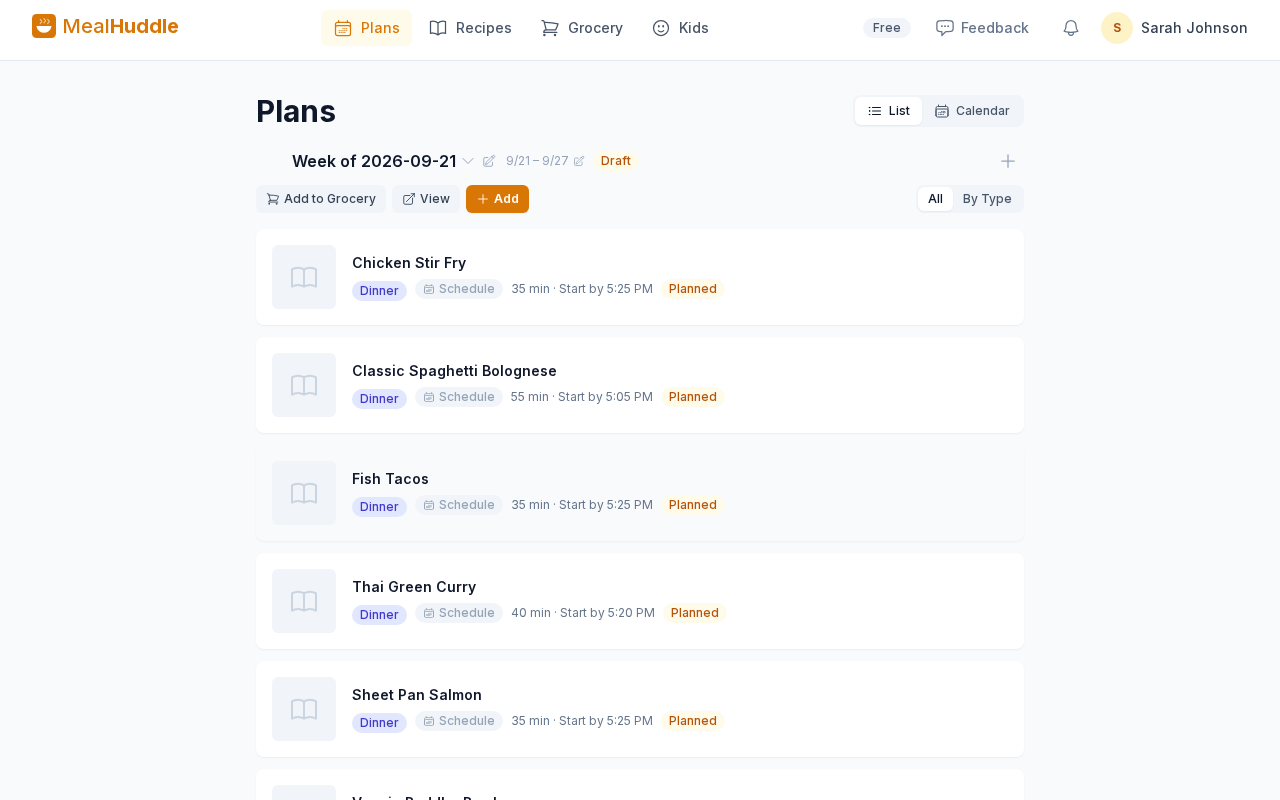
- Weekly (or biweekly, or monthly) planning — Drag meals into a calendar, see your whole week at a glance, and rearrange when things change.
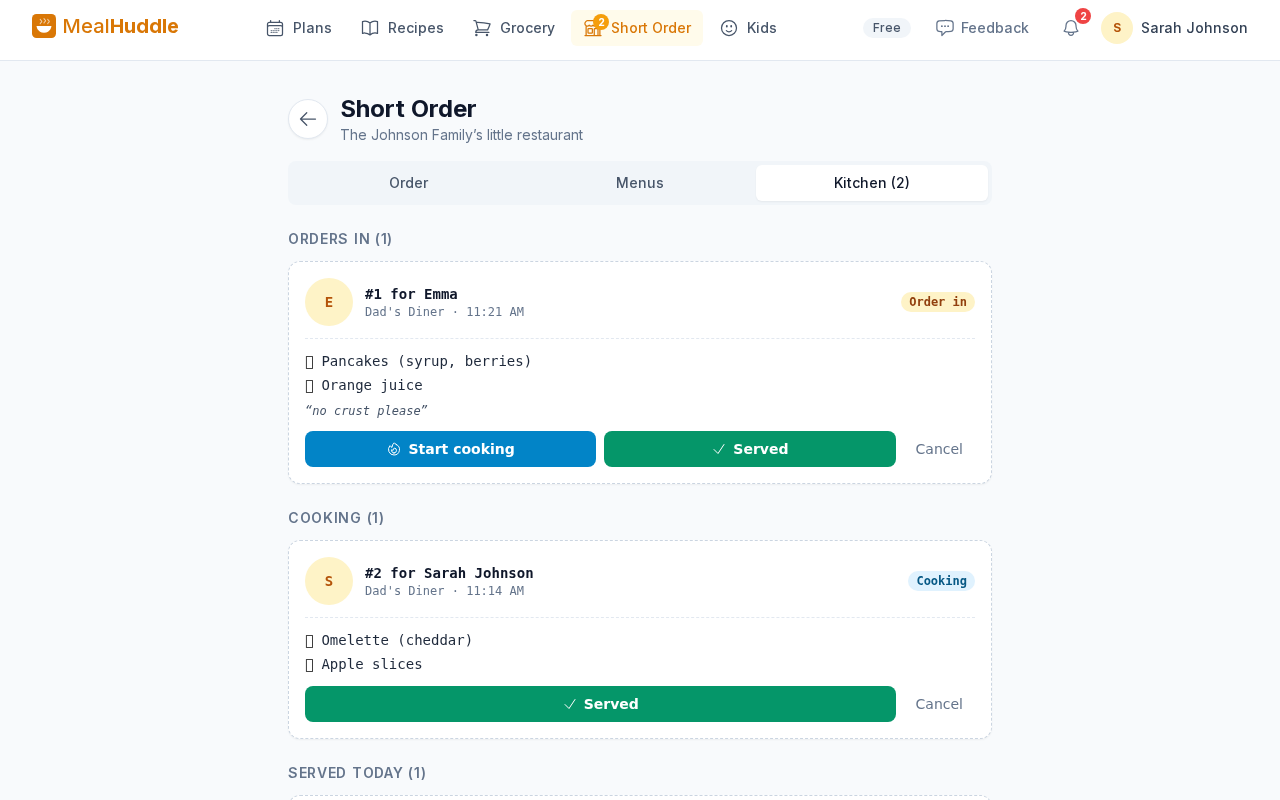
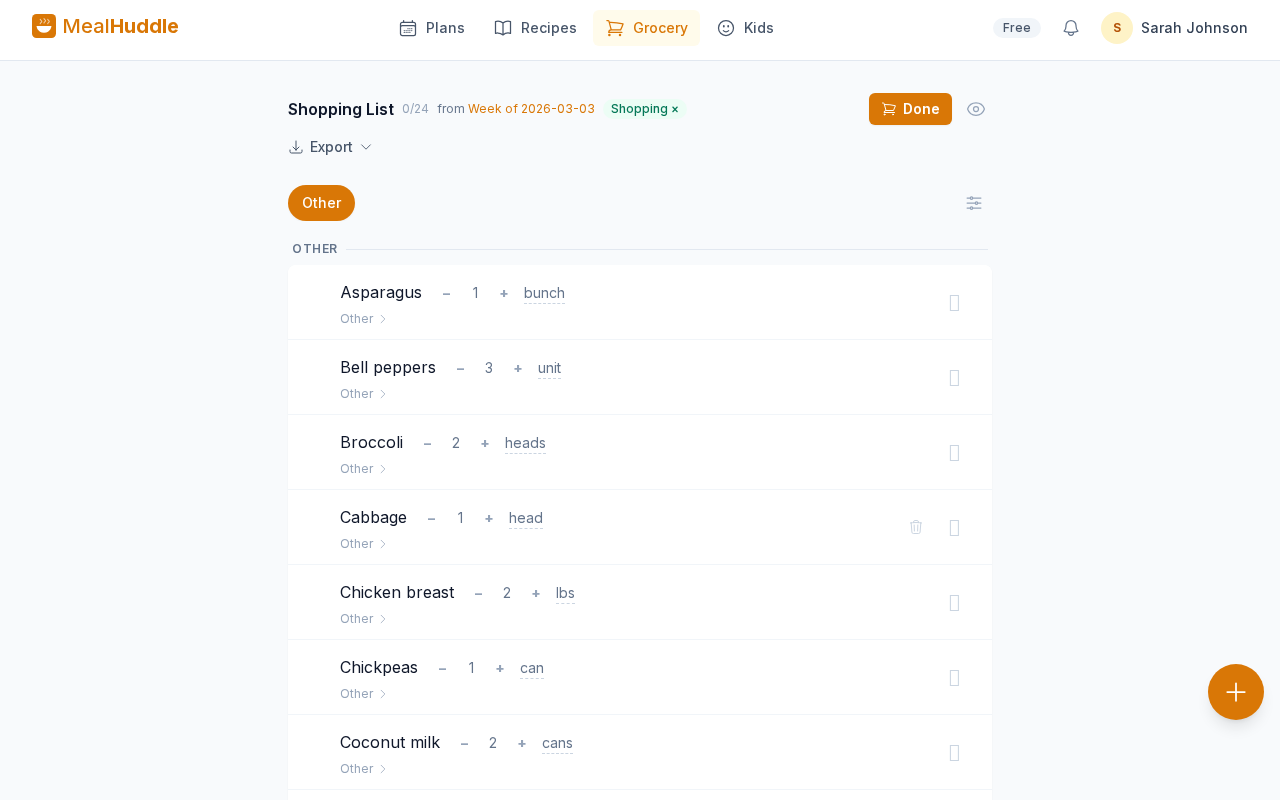
- Automatic grocery lists — Pick your meals, and the app generates a shopping list organized by store department. No cross-referencing required.
- Shared access — Everyone in the household can see the plan, add meals, and check off grocery items. No more "What's for dinner?" texts.
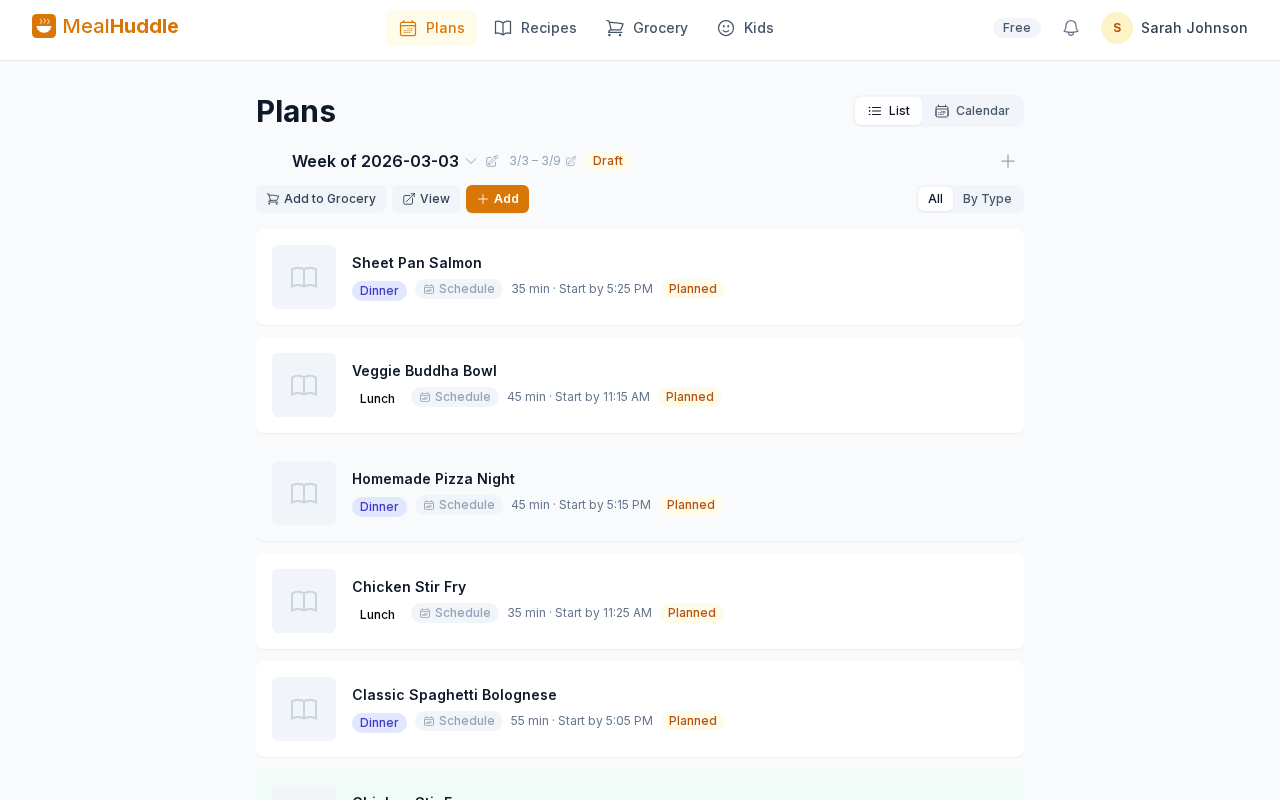
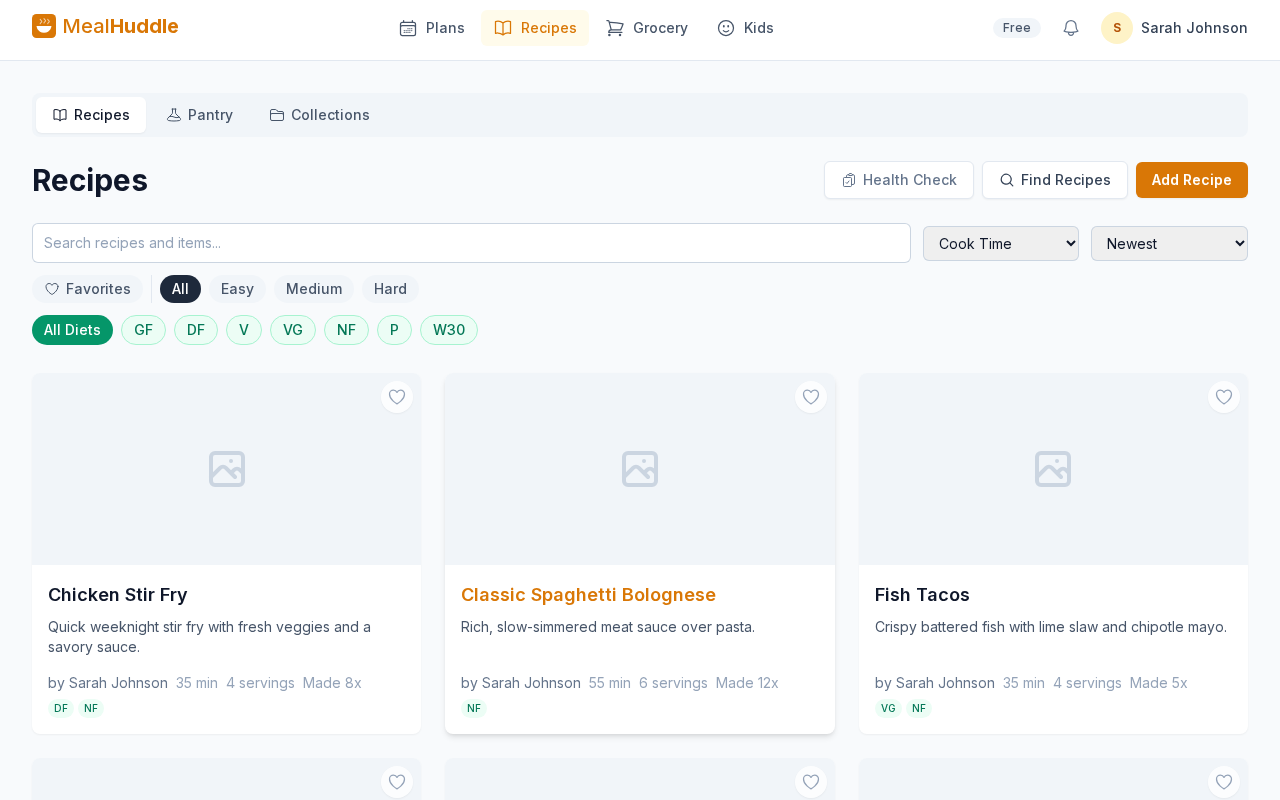
- Your recipe library in one place — Save recipes from anywhere — cookbooks, websites, photos, your grandma's index card — and find them instantly when planning next week.
- Real-time updates — Change the plan from the couch, and your partner sees the updated grocery list at the store.
The Real Comparison: Inspiration vs. Execution
Here's how to think about it. Meal prep cookbooks are about inspiration and education. Meal planning apps are about execution and coordination.
| | Cookbook | App | |---|---|---| | Finding recipes | Curated, tested, beautiful | Import from anywhere | | Planning the week | Manual (pen and paper) | Built-in calendar | | Grocery shopping | Write your own list | Auto-generated | | Household coordination | One person knows the plan | Everyone sees it | | Adapting mid-week | Start over | Drag and drop | | Finding old favorites | Flip through books | Search and filter | | Learning technique | Detailed instruction | Minimal |
Neither one is objectively better. They solve different problems.
When a Cookbook Is the Right Choice
Go with a cookbook if:
- You're learning to cook and want structured guidance with technique tips
- You enjoy browsing for inspiration and don't mind the manual planning work
- You cook primarily for yourself and don't need to coordinate with others
- You already have a planning system that works (whiteboard, notebook, spreadsheet) and just need better recipes
- You want a specific cuisine or dietary focus — there are amazing meal prep books dedicated to everything from keto to plant-based to 30-minute meals
A Few Worth Checking Out
If you decide a cookbook is the way to go, look for ones that include prep timelines, storage instructions, and reheating tips — not just recipes. Books that organize meals into weekly menus with corresponding grocery lists bridge some of the planning gap.
When an App Is the Right Choice
Go with a meal planning app if:
- You're planning for a household and need everyone on the same page
- You're tired of writing grocery lists by hand and forgetting items at the store
- You already have plenty of recipes but struggle with the weekly planning and shopping logistics (our best meal planning apps guide compares the top options)
- You want to reuse and organize recipes from multiple sources (cookbooks, websites, family recipes)
- Your plans change frequently and you need flexibility mid-week
The Best Answer: Use Both
Here's what actually works for most people: use a cookbook for inspiration and an app for execution.
Browse your favorite meal prep cookbook on the weekend for new ideas. When you find a recipe worth trying, save it to your app. Plan your week using the app's calendar, let it build your grocery list, and share the plan with your household. If the new recipe is a hit, it lives in your digital library forever — no more flipping through books trying to remember which page it was on.
This way, you get the best of both worlds. The creativity and learning that come from a great cookbook, plus the organization and coordination that keep meal prep sustainable week after week.
If you're looking for an app built around this kind of workflow — where your whole household plans together, grocery lists build themselves, and your favorite recipes are always one search away — give MealHuddle a try. It's free to start, and you can have your first week planned in about 10 minutes.