If you've ever stood in front of the fridge at 5:30 PM wondering "what's for dinner?", you're not alone. Meal planning sounds great in theory, but for a family of four, it can feel overwhelming — picky eaters, busy schedules, and the eternal question of what to do with that leftover bunch of cilantro.
The good news? Meal planning doesn't have to be complicated. With a simple system, you can save hours every week, cut your grocery bill, and actually enjoy dinnertime again. Here's how.
Why Meal Plan at All?
Before we dive into the how, let's talk about the why. Families who meal plan consistently report:
- Spending 20–30% less on groceries because they buy only what they need
- Saving 3–5 hours per week by eliminating daily "what's for dinner" decisions
- Throwing away less food since every ingredient has a purpose
- Eating healthier because meals are planned with nutrition in mind, not just convenience
For a family of four, those savings add up fast. That's real money and real time back in your week.
Step 1: Take Stock of What You Have
Before you plan a single meal, open your fridge, freezer, and pantry. What proteins need to be used up? What produce is about to turn? What staples are running low? If the plan ends up on the fridge whiteboard anyway, a photo of it can become the plan and the list.
Planning around what you already have is the single biggest money-saver in meal planning. It also reduces food waste — which is good for your wallet and the planet.
Quick tip: Keep a running list of pantry staples on your phone. When something runs low, add it immediately so you never forget.
Step 2: Pick Your Planning Window
Most families plan for one week at a time, but there's no rule that says you have to. Some families prefer:
- Weekly plans — the most popular choice, great for consistent schedules
- Bi-weekly plans — fewer planning sessions, works well with budget pay cycles
- Monthly plans — best for families who batch cook and freeze meals
Start with a weekly plan. You can always extend it once you find your rhythm. If you're brand new to this, our beginner's guide to weekly meal planning walks you through the basics step by step.
Step 3: Collect Recipe Ideas
Here's where it gets fun. Before you sit down to plan, gather recipe ideas from a few sources:
- Family favorites — the meals everyone already loves (keep a list!)
- Seasonal produce — what's fresh and affordable right now
- Leftovers-friendly meals — soups, casseroles, and stir-fries that use up odds and ends
- One new recipe per week — keeps things interesting without being overwhelming
A good rule of thumb: plan 5 dinners for a family of four. That gives you one night for leftovers and one night for takeout or eating out. Trying to plan 7 perfect dinners leads to burnout.
Step 4: Build a Balanced Week
Variety is the secret to a meal plan that lasts. Try to rotate through different protein sources and cooking methods:
- Monday: Chicken stir-fry (quick, uses up vegetables)
- Tuesday: Pasta with meat sauce (kid-friendly, batch-cook the sauce)
- Wednesday: Sheet pan salmon with roasted vegetables (minimal cleanup)
- Thursday: Tacos or burrito bowls (everyone customizes their own)
- Friday: Pizza night — homemade or frozen, no judgment
Notice how each night has a different feel? That prevents the "we're having chicken again?" complaint.
Step 5: Write Your Grocery List by Department
Once your meals are planned, build your grocery list organized by store department — produce, dairy, meat, pantry. This does two things:
- Speeds up shopping because you move through the store in order
- Prevents impulse buys because you're focused and efficient
Cross-reference your list with what you already have (from Step 1) to avoid buying duplicates. For a full breakdown of what belongs on your shopping list, check out our complete grocery list guide.
Step 6: Prep What You Can Ahead of Time
Sunday meal prep doesn't have to mean spending 4 hours in the kitchen. Even 30 minutes of prep makes a huge difference:
- Wash and chop vegetables for the week
- Cook a batch of rice or grains
- Marinate proteins for the first few days
- Pre-portion snacks for school lunches
The goal isn't to cook everything in advance — it's to remove the friction that makes weeknight cooking feel like a chore. If you want to go deeper on this, our ultimate meal prep guide has 50+ ideas for every skill level.
Common Mistakes to Avoid
Being too ambitious. Don't plan 7 elaborate meals in your first week. Start simple, build confidence, then get adventurous.
Ignoring your schedule. Got soccer practice on Wednesdays? That's a slow cooker or sheet pan night, not a 45-minute recipe night.
Not involving the family. Let everyone pick one meal per week. Kids are way more likely to eat something they chose. One night a week, go further and let them order off a menu.
Forgetting about lunches and snacks. Dinner planning is great, but don't leave yourself scrambling for lunch ideas. Plan at least a few grab-and-go options.
Making It Stick
The biggest challenge with meal planning isn't starting — it's keeping it going. Here are a few tips:
- Plan on the same day every week so it becomes a habit
- Keep a "rotation" of 15–20 meals that your family loves — you don't need to reinvent the wheel every week
- Use a shared tool so everyone in the household can see what's planned and add ideas
- Celebrate the wins — less food waste, lower grocery bills, and fewer stressful evenings are all worth acknowledging
The Bottom Line
Meal planning for a family of four doesn't require a Pinterest-perfect spreadsheet or hours of research. It requires a simple system, a willingness to start small, and the understanding that not every meal has to be a masterpiece.
Start with this week. Pick 5 dinners. Write your list. Shop once. You'll be amazed at how much calmer your evenings become.
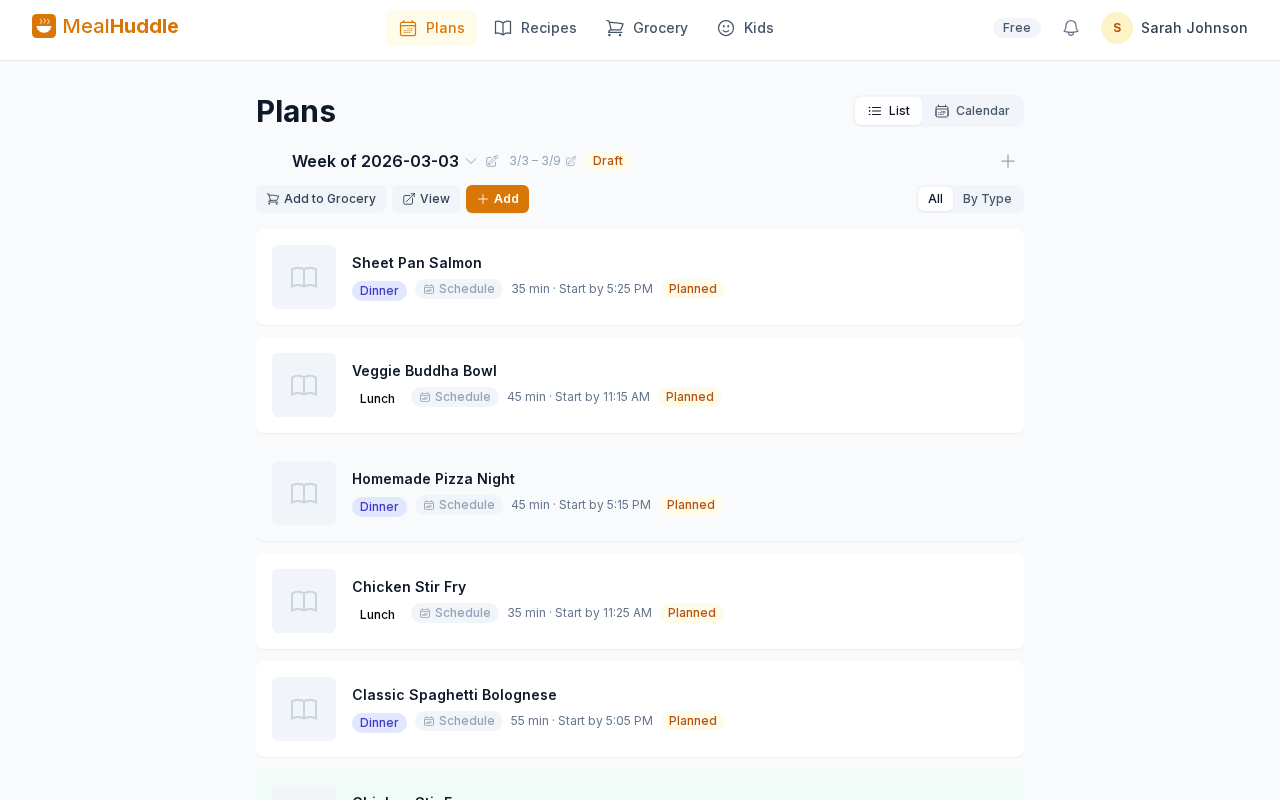
And if you want a tool that makes the whole process easier — from planning meals to generating grocery lists — give MealHuddle a try. It's built for exactly this.