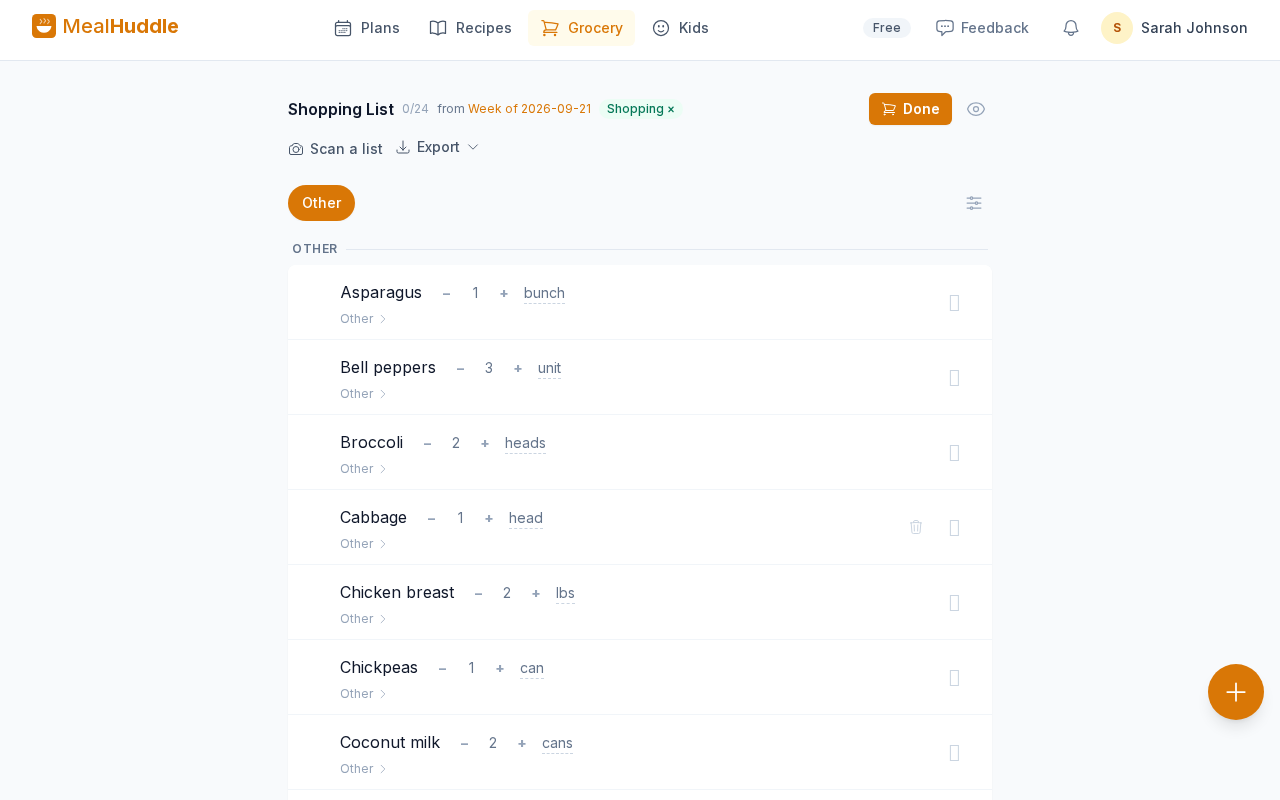
There's a special kind of panic that hits when you open the fridge, see three condiments and half a lemon, and realize you have nothing to actually cook. A well-thought-out grocery list is the antidote. Not a scribbled note you lose in the parking lot — a real, organized list that keeps your kitchen stocked and your meals on track. If yours lives on the fridge whiteboard, a photo of it can become the list.
Whether you're setting up a kitchen for the first time or just tired of forgetting the basics, this guide walks you through everything you need, category by category.
Why a Good Grocery List Changes Everything
Most people shop one of two ways: they wander the aisles and grab whatever looks good, or they buy the same five things every week and wonder why dinner is boring.
A complete grocery list solves both problems. It gives you structure without being rigid — a foundation of staples that you can build any meal around, plus room for the fresh ingredients that change week to week.
The benefits stack up fast:
- Less food waste — you buy what you need, not what catches your eye
- Less money spent — impulse buys disappear when you shop with a plan
- Less stress — you always know what's in the kitchen and what you can make with it
- Fewer trips — a thorough list means one trip covers the whole week
The Basic Grocery List: Produce
Fresh fruits and vegetables should be the backbone of your shopping. Buy a mix of items that last and items you'll use right away.
Vegetables (buy weekly):
- Onions and garlic — the flavor base for almost everything
- Carrots and celery — soups, snacks, stir-fries
- Bell peppers — versatile and colorful
- Broccoli or cauliflower — roast, steam, or toss in pasta
- Spinach or mixed greens — salads and quick sautés
- Tomatoes — fresh eating, sandwiches, sauces
- Potatoes and sweet potatoes — filling, affordable, and long-lasting
Fruits (buy weekly):
- Bananas — the universal snack
- Apples or oranges — they last longer than most fruit
- Berries (in season) — breakfast, snacking, smoothies
- Lemons or limes — a squeeze of acid brightens any dish
Pro tip: Buy hardy produce (potatoes, carrots, onions, apples) in larger quantities. They keep for weeks. Save delicate items (berries, lettuce, avocados) for early-week meals.
Proteins: The Center of the Plate
Plan your proteins around the meals you're cooking this week. Having a few staples on hand means you're always one pan away from dinner.
Fresh (buy based on your meal plan):
- Chicken breasts or thighs
- Ground beef or turkey
- Salmon or white fish fillets
- Pork chops or tenderloin
Pantry and freezer proteins (always keep stocked):
- Eggs — breakfast, lunch, dinner, and baking. The most versatile item on any grocery list
- Canned tuna or salmon
- Dried or canned beans (black, pinto, chickpeas)
- Tofu or tempeh (if your household eats plant-based)
- Frozen shrimp — defrosts in minutes, ready to cook
Dairy and Refrigerated Staples
These items round out meals and keep breakfast and snacks covered.
- Milk (or your preferred alternative)
- Butter — cooking and baking essential
- Cheese — a block of cheddar and shredded mozzarella cover most needs
- Plain yogurt or Greek yogurt — breakfast, marinades, and sauces
- Sour cream or cream cheese — optional but useful for dips and baking
Pantry Staples: Your Grocery List Template
This is the section that separates a stocked kitchen from an empty one. These items have long shelf lives and form the foundation of hundreds of meals. Think of this as your grocery list template — the items you replenish whenever they run low.
Grains and pasta:
- Rice (white, brown, or both)
- Pasta (at least two shapes — spaghetti and a short cut like penne)
- Bread — sandwich loaf and/or tortillas
- Oats — breakfast for pennies
Canned and jarred goods:
- Canned tomatoes (diced and crushed) — the base of dozens of sauces
- Tomato paste
- Canned beans (black, kidney, chickpeas)
- Broth or stock (chicken or vegetable)
- Coconut milk — curries, soups, smoothies
- Pasta sauce — for nights when you need dinner in 15 minutes
Oils, vinegars, and sauces:
- Olive oil — cooking and dressings
- A neutral cooking oil (vegetable, canola, or avocado)
- Soy sauce
- Hot sauce
- Vinegar (apple cider or red wine)
- Honey or maple syrup
Spices and seasonings:
- Salt and black pepper
- Garlic powder and onion powder
- Cumin, chili powder, paprika
- Italian seasoning or dried oregano
- Cinnamon
- Red pepper flakes
You don't need to buy all of these at once. Build your spice collection over a few weeks, adding what each recipe calls for.
Frozen Foods: The Unsung Heroes
Your freezer is the most underrated section of your kitchen. Frozen foods are picked and preserved at peak freshness, they're affordable, and they never go bad on you mid-week.
- Frozen vegetables — peas, corn, mixed stir-fry blends, broccoli florets
- Frozen fruit — berries, mango chunks (perfect for smoothies)
- Frozen proteins — chicken breasts, fish fillets, shrimp
- Bread and tortillas — freeze what you won't use this week
- A backup meal — frozen pizza, soup, or a casserole you made last month
Snacks and Extras
A good grocery list doesn't stop at meals. Snacks keep everyone happy between meals and prevent desperate takeout orders at 3 PM.
- Nuts or trail mix
- Crackers and hummus
- Peanut butter (or almond butter)
- Fresh fruit (doubles as dessert)
- Granola bars — for lunches, car snacks, and emergencies
- Popcorn kernels — the cheapest snack you can make
Healthy Grocery List Tips
If eating better is one of your goals, a few small shifts make a big difference:
- Shop the perimeter first. Produce, proteins, and dairy live on the edges of the store. The middle aisles are where most of the processed stuff hides.
- Choose whole ingredients over packaged meals. A chicken breast, a sweet potato, and a bag of broccoli costs less and feeds you better than a frozen dinner.
- Add one new vegetable each week. Never cooked bok choy? Grab one. Building a healthy grocery list is about gradual expansion, not an overnight overhaul.
- Read the ingredients, not just the label. "Natural" and "healthy" on the front mean nothing. Flip it over and check what's actually in it.
Grocery List Ideas for Different Households
No two kitchens are the same. Here are a few grocery list ideas to adapt the basics to your situation:
Cooking for one? Buy smaller quantities of produce and proteins. Frozen vegetables and canned beans are your best friends — no waste, no pressure to use them by Thursday.
Feeding a big family? Buy in bulk where it makes sense (rice, pasta, canned tomatoes, frozen vegetables). Plan meals that stretch — soups, casseroles, and taco nights where everyone builds their own. Need dinner inspiration? We have 75 easy family dinner ideas organized by category.
Short on time? Lean on pre-washed salads, rotisserie chicken, canned beans, and frozen stir-fry mixes. These aren't cheating — they're smart shortcuts that keep you cooking at home instead of ordering delivery.
Tight on budget? Prioritize dried beans, eggs, root vegetables, rice, and in-season produce. See our budget meal planning guide for a full breakdown.
How to Use This List
Don't try to buy everything here in one trip. Instead:
- Stock your pantry gradually. Pick up a few staples each week until your shelves are solid.
- Plan meals first, then shop. Your weekly grocery list should start with "what am I cooking?" — then pull ingredients from there. A meal planning calendar makes this step almost automatic.
- Keep a running list. When you use the last of something, write it down immediately. The best grocery list is the one you build throughout the week, not the one you try to remember in the parking lot.
- Organize by department. Group items by where they live in the store — produce, meat, dairy, pantry, frozen. You'll shop faster and forget less.
Ready to Simplify Your Grocery Routine?
A well-stocked kitchen makes everything easier — weeknight dinners, packed lunches, lazy weekend breakfasts. Start with the staples, build from there, and let your grocery list do the thinking for you.
If you want a tool that turns your meal plan into a grocery list automatically — organized by department and shared with your whole household — try MealHuddle free. It's the easiest way to plan meals, track what you need, and never forget the eggs again.