The ads make it look so easy. A stack of neat containers lands on your porch, you heat one up, dinner is done. For one person working late, meal prep delivery can genuinely be the sane choice. But if you're feeding a household — a partner, a couple of kids, a roommate who eats like two people — the math changes fast, and so does the fridge.
This post walks through what a delivery service actually costs when you multiply it by three or four people, what you're really paying for, and a routine that gets you the same "dinner is handled" feeling for a fraction of the price.
The Real Cost of Meal Prep Delivery for a Household
Most services land somewhere between $9 and $14 per single-serving meal, with shipping and a minimum order on top. The exact numbers vary, but the structure doesn't: you pay per plate, and every person in the house is a plate.
Run it for a family of four eating five delivered dinners a week:
- 4 people x 5 dinners = 20 meals
- 20 meals x ~$11 = around $220 a week, before shipping
- That's dinner only. Breakfast, lunches, snacks, and the kids' second dinner at 8 PM are still on your grocery bill.
For a household of three it's closer to $165 a week; for a couple, around $110. Compare that with cooking the same kind of food at home, where a pot of chili or a tray of roasted chicken thighs feeds four for about the price of one or two delivered containers. Our budget-friendly meal plans guide shows a full week of dinners for two coming in at less than what one person would pay for a week of delivered dinners.
Then there's the fridge problem. Twenty containers is a lot of containers. They're sized for one, so there's no "I'll just make a bigger batch." There's no passing a dish around the table. Everyone opens their own box, and the one nobody wanted sits in the back until trash day.
What You're Actually Paying For
It helps to break the service into the jobs it does for you:
- Deciding what's for dinner
- Shopping for it
- Portioning it
- Cooking it
Here's the thing — the first two are the ones that feel heavy at the end of a long day, and they're also the cheapest to replace. Deciding takes fifteen minutes on a Sunday if you do it once for the whole week instead of five times at 5:30 PM. Shopping takes one trip if you walk in with a list built from those decisions.
Cooking is the job people think they're outsourcing, but a household kitchen has a huge advantage over a delivery box: one pot feeds everyone. Doubling a recipe takes almost no extra time, and that second half is tomorrow's lunch.
Special diets cost extra, and they shouldn't. Vegetarian meal prep delivery and keto meal prep delivery usually come with a premium attached, even though the ingredients run the other way. Beans, lentils, eggs, and seasonal vegetables are some of the cheapest food in the store — our vegan meal prep guide gets a whole week of plant-based dinners prepped in a couple of hours. Keto at home is eggs, ground beef, chicken thighs, and greens, bought in bulk when they're on sale. The restriction is a reason to cook at home, not a reason to pay someone else more.
Mixed diets under one roof are where delivery really falls apart. If one person is vegetarian, one is doing keto, and the kids just want tacos, you're ordering from two or three menus. At home, that's one taco night with a pot of black beans and a skillet of seasoned beef, and everyone builds their own.
What to Do Instead: Affordable Meal Prep for the Whole House
You don't need a two-hour Sunday cooking marathon to replace a delivery box. You need a few habits that take the decision-making out of weeknights.
1. Decide once, together
Pick five dinners for the week, and do it with the people who'll eat them. Ask the kids for one request each. Ask your partner which night they'll be home late. Write it where everyone can see it — a whiteboard on the fridge, a shared note, a calendar. Our guide to meal planning for a family of four walks through the whole routine step by step.
The point is that "what's for dinner?" gets answered once, on Sunday, instead of five times by whoever got home first.
2. Cook once, feed everyone
Choose two or three of those dinners to make in double batches. Chili, soup, curry, a tray of roasted chicken thighs, a big pot of rice — anything that holds up for a couple of days. This is the part a delivery service can't do for a household: one pot, four plates, no extra effort. The ultimate meal prep guide has dozens of batch-friendly ideas if you need a starting point.
3. Turn the plan into one shopping trip
Every ingredient from those five dinners goes on one list. Check the pantry before you go so you're not buying a third jar of cumin. Shop once, and stick to the list.
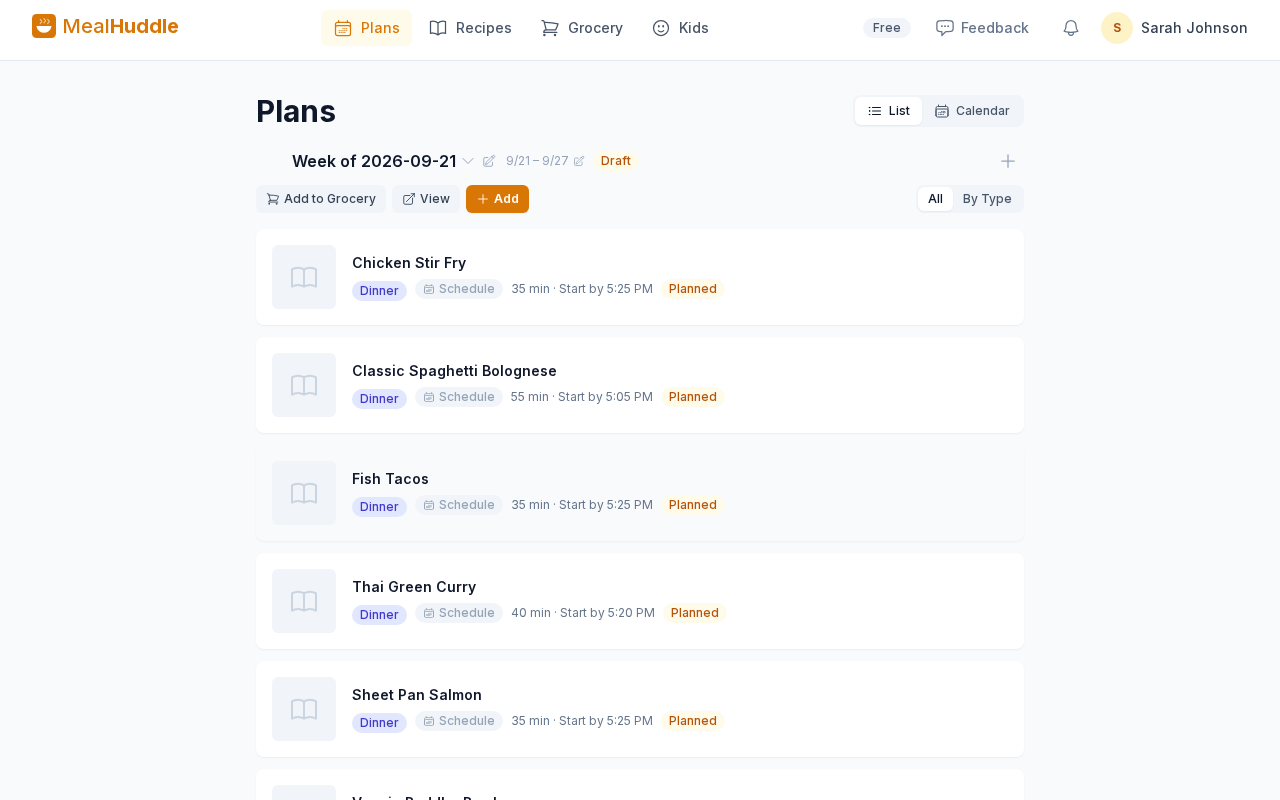
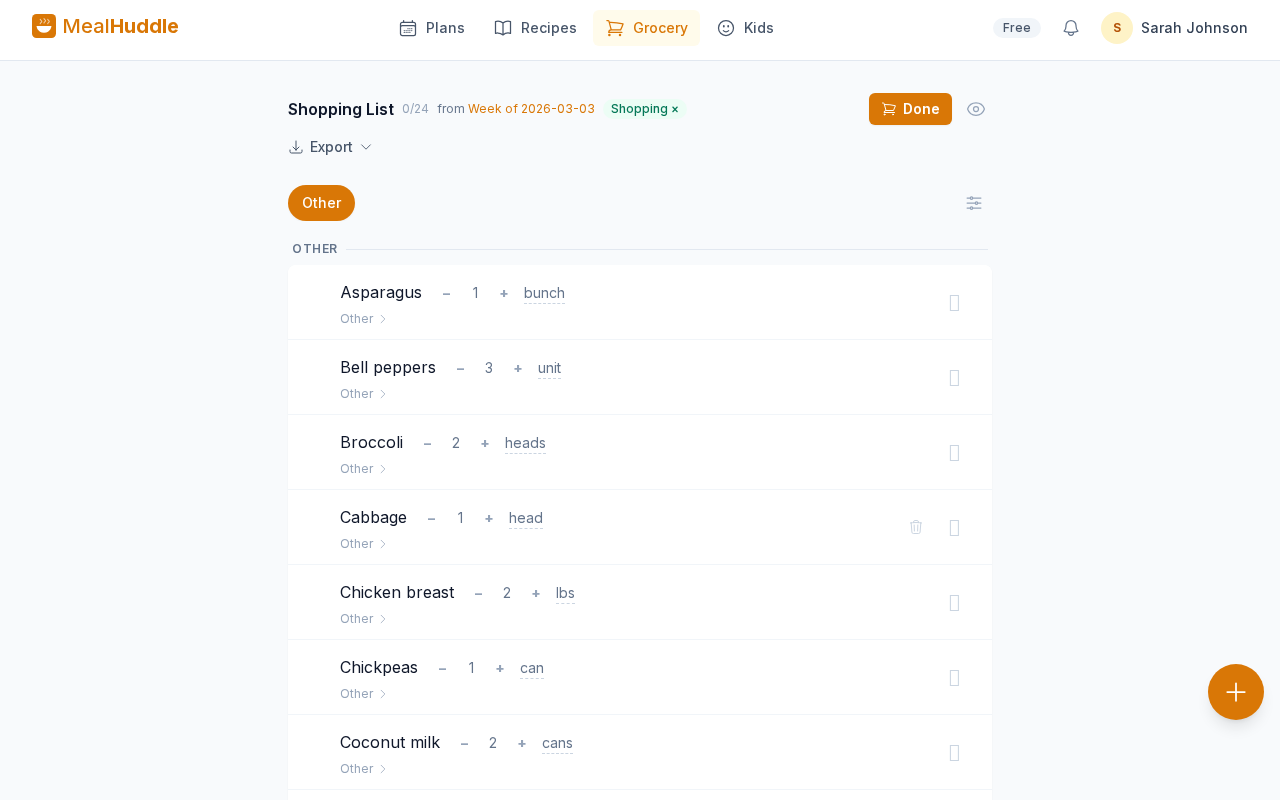
This is where MealHuddle earns its spot on your phone. Put the five dinners on the calendar and it builds the grocery list from the plan, organized by store department and shared with everyone in the house in real time. Anything already in the pantry gets marked "already have" and stays off the shopping trip. Each recipe also shows a cost estimate, so you can see the per-plate number sitting right next to what the box would have cost — usually a short, satisfying comparison.
4. Give leftovers a job
Delivery containers don't make leftovers. Home cooking does, and leftovers are only a savings if they get eaten. Plan for them on purpose: Sunday's chili is Thursday's baked-potato topping, Monday's roasted chicken is Wednesday's wraps. Put the leftover night on the plan like any other meal so nobody "forgets" and orders in.
5. Keep one easy night
Pick one night to be deliberately low-effort — breakfast for dinner, quesadillas, a rotisserie chicken and a bag of salad. The delivery box was selling you a weeknight without effort. You can give yourself one for a few dollars.
A Week That Beats the Box
Here's what the routine looks like for a family of four:
Sunday: Big pot of chili, double batch, with cornbread. Leftovers: another full dinner's worth.
Monday: Sheet-pan chicken thighs with potatoes and broccoli. Roast two trays. Leftovers: shredded chicken for Wednesday.
Tuesday: Taco night. Seasoned beef on one side, black beans on the other, everyone builds their own. Works for the vegetarian and the picky eater at the same table.
Wednesday: Chicken wraps from Monday's extras, plus whatever vegetables are left.
Thursday: Chili over baked potatoes. Sunday's work, Thursday's dinner.
Friday: Easy night. Eggs, toast, fruit, done.
Five dinners, three real cooking sessions, and a grocery bill that comes in well under the delivered version. Nobody ate the same thing out of the same container twice in a row, and the kids got a vote.
When a Delivery Service Actually Makes Sense
To be fair, there are real cases for it:
- A new baby, a surgery, a move. Two weeks of not thinking about food is worth the money.
- One person, long hours. Cooking for one is a lot of work for a small payoff, and the per-plate math is kindest at a household of one.
- A short reset. Some people use a few weeks of portioned meals to relearn what a serving looks like before going back to cooking.
Notice what all of these have in common: short-term, or one person. The service is weakest at exactly the thing a household needs most — feeding several people, every night, for a long time, without going broke.
Start With One Week
Don't cancel anything or commit to a lifestyle. Just plan one week the way we outlined above and see what it costs.
MealHuddle makes that first week easy. Put the dinners on a calendar everyone in the house can see, import your go-to recipes from a link or a photo of a cookbook page, let the kids rate what they ate in Little Chefs so next week's plan gets smarter, and drop what's left into the leftovers tray on the calendar so it's in front of everyone instead of lost in the back of the fridge. The grocery list writes itself from the plan.
That's the whole pitch: the "dinner is handled" feeling, for everyone in the house, at grocery-store prices.
Ready to run your own kitchen? Try MealHuddle free.