Feeding a family on a tight budget has less to do with coupons and more to do with what goes on the list before you ever leave the house. A cheap grocery list isn't a shorter list — it's a smarter one, built around ingredients that stretch across several dinners, keep well in the fridge, and still taste like something your kids will ask for again.
This guide walks through how to build that list: the ingredients worth their shelf space, a sample list for a family of four, and the budget grocery shopping habits that keep the total low week after week.
Why a Cheap Grocery List Starts at Home, Not at the Store
The most expensive grocery trip is the one without a plan. You walk in hungry, grab what looks good, and come home with three half-used bags of produce and no actual dinners.
Flip the order. Decide what you're cooking first, then write the list from those meals. Every item should have a job — a specific dinner it belongs to, or a staple that shows up in several of them.
Two quick things before you write anything down:
- Shop your kitchen first. That half bag of rice, the frozen chicken thighs, the cans of beans in the back — those are free ingredients for this week's plan.
- Pick meals that share ingredients. If taco night uses half a cabbage, plan a stir-fry that uses the other half. One bunch of cilantro should show up in two dinners, not wilt after one.
If you're new to planning around a family's schedule, our guide to meal planning for a family covers how to pick a week's worth of dinners without the arguments.
The Formula: Anchors, Stretchers, Fresh, and Flavor
Every cheap grocery list that actually feeds people is built from the same four groups.
Anchors: the cheap proteins
Protein is where most of the money goes, so this is where the biggest savings live:
- Eggs — breakfast, fried rice, frittatas. A dozen usually runs $2–4 and covers several meals.
- Dried beans and lentils — a one-pound bag often costs $1–2 and makes six or more servings.
- Chicken thighs — almost always cheaper than breasts, harder to overcook, and more flavorful.
- Ground turkey or beef — buy the family pack on sale, split it into one-pound portions, and freeze.
Plan your week around two or three of these, not six — fewer packages, and less chance something goes bad before you cook it.
Stretchers: what turns a little protein into a full plate
- Rice — the cheapest base there is, especially from a larger bag
- Pasta — a pound is often under $2 and feeds the whole table
- Potatoes — a five-pound bag covers roasted potatoes, baked potatoes, and hash
- Oats — breakfast for pennies, and one canister lasts for weeks
- Tortillas — tacos, quesadillas, breakfast wraps, and a stand-in for bread
Fresh: produce that survives the week
Soft lettuce and berries are the budget killers — half of them end up in the trash. Lean on produce that holds up:
- Onions, garlic, carrots, celery — the flavor base for soups, sauces, and stir-fries
- Cabbage — one head makes slaw, stir-fry filling, and taco topping, and it keeps for weeks
- Apples, oranges, bananas — kid-approved snacks that don't need a container
- Frozen vegetables — peas, corn, green beans, broccoli. Just as nutritious as fresh, cheaper, and they wait patiently for you.
Flavor: the cheap stuff that makes it taste good
Budget meals taste cheap when they're bland, not when they're simple. A few dollars here goes a long way:
- Salt, pepper, garlic powder, cumin, chili powder, Italian seasoning
- Soy sauce, hot sauce, a neutral cooking oil, and a lemon or two
- Canned tomatoes and tomato paste — the backbone of a dozen sauces
- A block of cheddar — shredding your own costs less than the bag
Once the pantry is built, you replace these one at a time as they run low. Our complete grocery list has the full staples checklist if you're starting from an empty kitchen.
A Sample Cheap Grocery List for a Family of Four
Here's what this looks like in practice — one weekly trip built to cover six dinners, with breakfast and lunch leaning on the same ingredients. Prices are typical ranges; yours will vary by region and season.
Proteins (~$22–32)
- 2 dozen eggs
- 3 lb chicken thighs
- 2 lb ground turkey or beef
- 1 lb dried lentils
- 2 cans black beans
Stretchers (~$10–14)
- 5 lb bag of rice (or a smaller bag if you're stocked)
- 2 lb pasta
- 5 lb potatoes
- 1 pack of tortillas, 1 loaf of bread
Fresh (~$18–24)
- 3 lb onions, 1 head of garlic
- 2 lb carrots, 1 bunch of celery
- 1 head of cabbage
- 1 bag of apples, 1 bunch of bananas
- 3 bags of frozen vegetables, 1 bag of frozen fruit for oatmeal
Dairy and flavor (~$15–20)
- 1 gallon of milk, 1 block of cheddar
- Plain yogurt (a large tub, not single cups)
- 2 cans of diced tomatoes, 1 can of tomato paste
- Whichever one or two spices or sauces ran out
That list usually lands in the $70–90 range before snacks, coffee, and the odd extra — most families of four end up closer to $100–130 for the full week once those are in. To see how a budget like that plays out across breakfast, lunch, and dinner, our budget-friendly meal plans guide walks through a full sample week with costs.
Affordable Meal Prep: What That List Actually Makes
A list is only cheap if it turns into dinners. Here's how those ingredients map to a week:
- Sunday: Roast chicken thighs with roasted potatoes and carrots. Cook extra thighs for later.
- Monday: Lentil soup with onion, carrot, celery, and canned tomatoes. Makes enough for two lunches.
- Tuesday: Tacos with seasoned ground meat, black beans, shredded cabbage, and cheese.
- Wednesday: Chicken fried rice using Sunday's extra chicken, leftover rice, eggs, and frozen peas and carrots.
- Thursday: Pasta with meat sauce from the second pound of ground meat and the canned tomatoes.
- Friday: Loaded baked potatoes with whatever's left — beans, cheese, yogurt in place of sour cream, chopped vegetables.
- Saturday: Breakfast for dinner — eggs, potato hash, toast, and fruit.
Nothing gets bought for a single meal — the cabbage, the chicken, and the canned tomatoes each carry two dinners. That's the whole trick to affordable meal prep: overlap on purpose. One hour on Sunday cooking the rice, browning the meat, and roasting the chicken turns weeknight dinners into assembly.
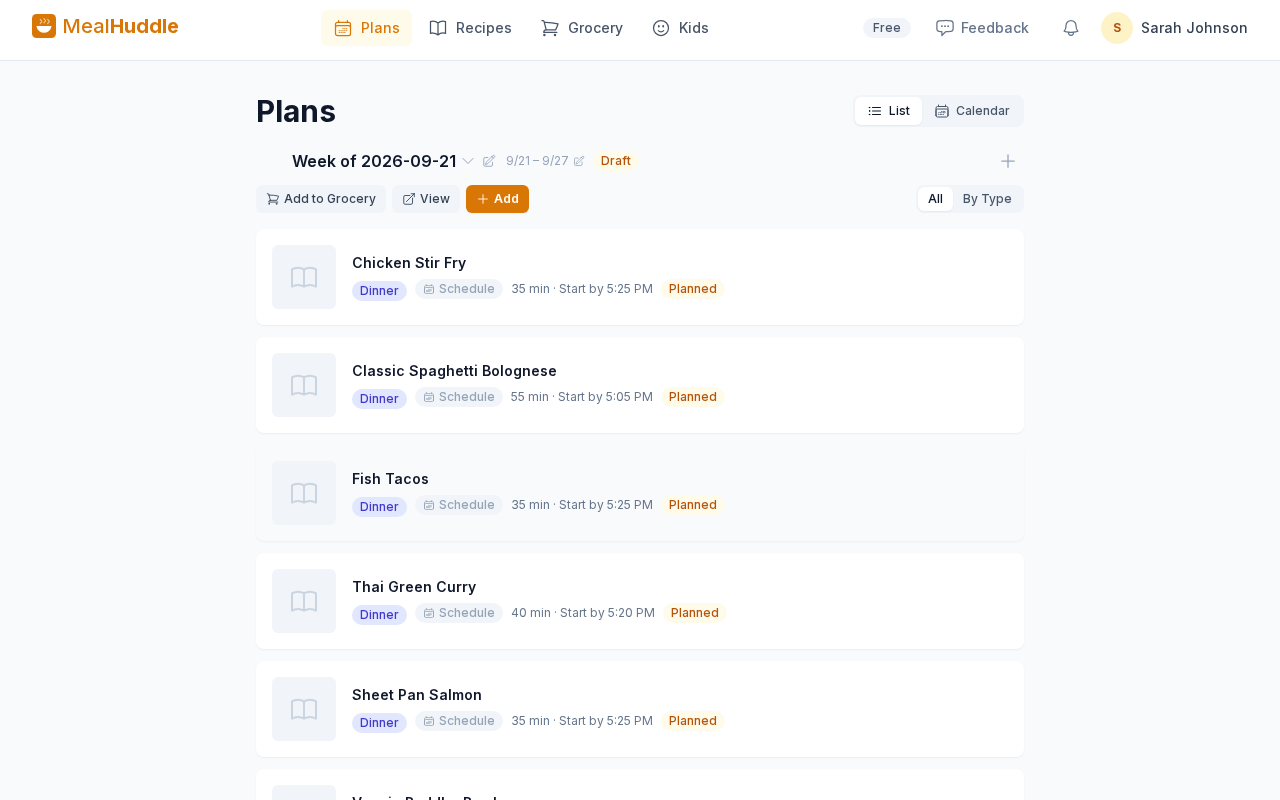
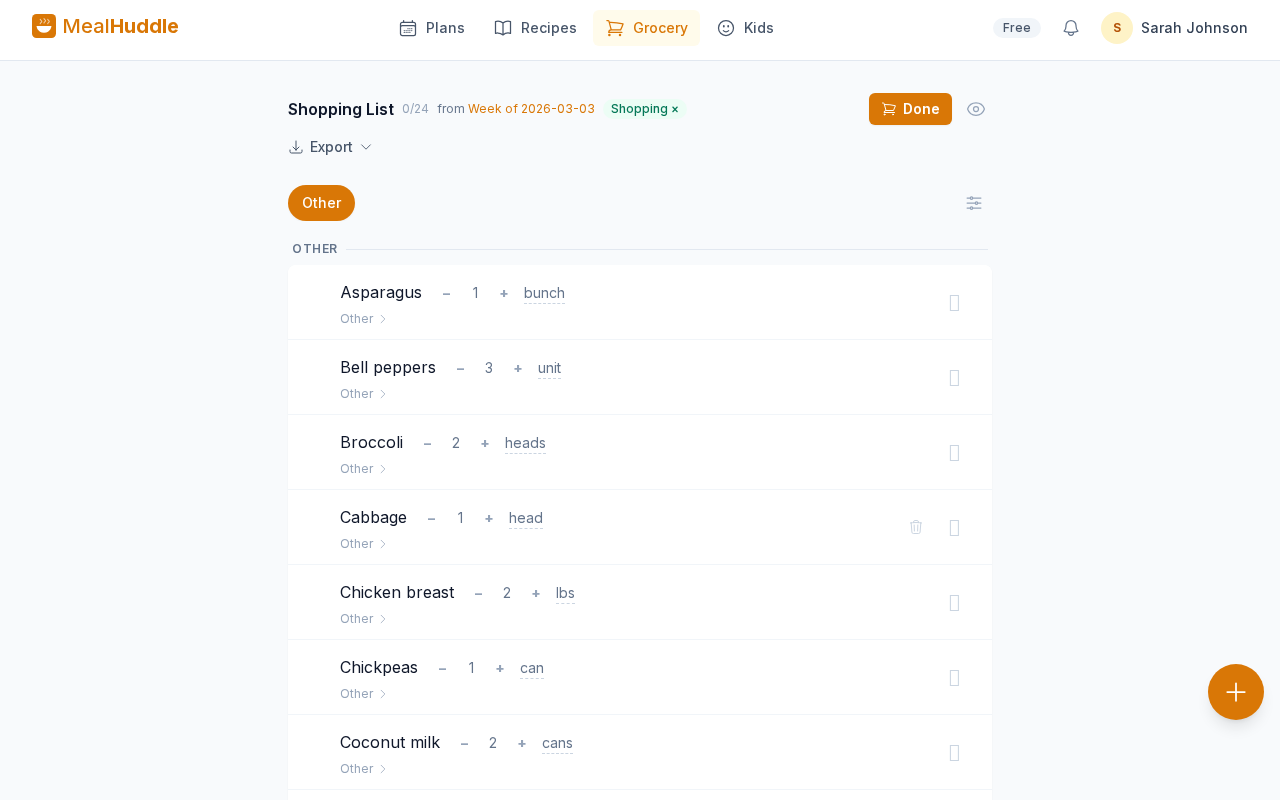
This is where a cost estimate per recipe earns its keep. In MealHuddle, each recipe in your library carries an estimated cost, so when you drop dinners onto the week's calendar you can spot the expensive night and swap it for something cheaper before the list is even written. The grocery list then builds itself from the plan, organized by store department, so Tuesday's cabbage and Wednesday's cabbage show up as one line, not two.
Budget Grocery Shopping Habits That Keep the Bill Low
The list gets you most of the way. These habits close the gap:
Shop once. Every extra trip is an extra round of impulse buys. One well-planned trip a week beats three quick ones.
Buy the store brand by default. For rice, pasta, canned tomatoes, beans, oats, and frozen vegetables, the store brand is almost always the same thing in a plainer bag.
Let the sale change the plan, not the budget. If chicken thighs are pricey this week and pork shoulder is cheap, swap the protein and keep the sides. A flexible plan is a cheap plan.
Keep the list alive during the week. When you use the last of the oats on Wednesday, it goes on next week's list right then, not from memory in the parking lot. With MealHuddle the list is shared with the whole household in realtime, so whoever notices the empty container adds it, and whoever ends up at the store sees it. Anything you already have at home gets marked "already have," so it drops out of the trip instead of getting bought twice.
Start With One Trip
This week, pick five dinners that share ingredients, write the list from those dinners, and shop once. Keep the receipt. Next week, do it again and compare.
The list gets cheaper as the pantry fills — and easier as the same dozen ingredients become the ones your family actually asks for.
Ready to make this week easier? Try MealHuddle free — plan the week, let the grocery list build itself, and shop once with everyone on the same page.